PRESS · anatomy of the specimen
One organism, five organs.
FIG. BLorethe origin record — a micro-play in three acts
THE LORE · the origin of the institution
A micro-play in three acts: the story and origins of UFP.
Want to read a three-act micro-play? It’s a mock epic, but without the mock1. For those who love decorating their time with language.
Before it was all goo and bloom, cheeky lexical quibs and coinage; before it was acid critique and serious editorial guidelines; before the press’s voice that says “hi” flirtatiously to its followers to secure more submissions, UFP was born from someone’s rage and delight, Hollywood courtship and higher education sabotage, muteness and life story converging2. If it looks like we were born this way, it’s because we were.
FIG. AFounderthe masthead — one founder, several lives
MASTHEAD · the founder, in her several lives
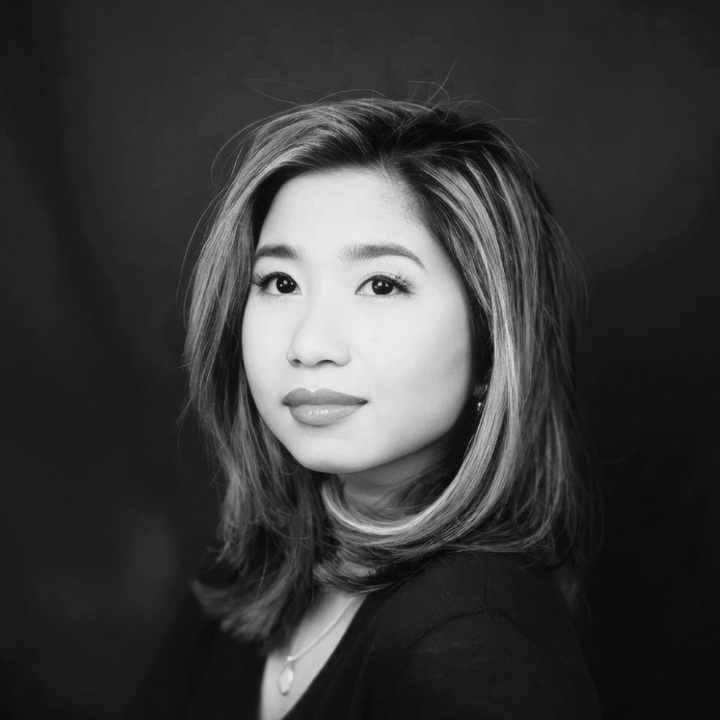
Catherine D.L. Tan
Founder, CEO & Publisher · legal philosopher of avant-garde technologies · economic diplomat · national-prizewinning novelist & playwright
For a living, Catherine Tan designs legal worlds for things that don’t yet fit our categories: a bonkers job description, and an accurate one. She came up with Law and the Challenge of Weird Fringe Things, a field which only she teaches, asking how shiny new things (de-extinction, indigenous robots, plant-object cyborgs, decentralised digital planets) destabilise the ancient, load-bearing constructs that prop social reality up. She works at the level of the new axioms brought on by avant-garde technologies, and designs worlds based on them. UFP is the same work, run on knowledge instead of law: she designs the future of thought, and builds the media systems to carry it.
The press runs on her personal philosophy, scaled to an institution: world-destroying, then world-making.
SELECTED DISTINCTIONS — GATES CAMBRIDGE SCHOLAR · MOST VISIONARY CEO IN MEDIA & PUBLISHING, 2024 · NATIONAL LITERARY PRIZE, GEOPOLITICAL SATIRE · TOP 100 TRAILBLAZING QUEER ALUMNI, UNIVERSITY OF CAMBRIDGE — ALONGSIDE TILDA SWINTON, SIR IAN McKELLEN & STEPHEN FRY · Hollywood × Higher Education
THE FULL PROFILE, IN HER SEVERAL LIVES → HOMEThe full masthead debuts as contracts are countersigned. We print names when the ink is dry.
FIG. E · HOW WE WORK ↓FIG. CColophonthe design story — why everything looks like this
THE COLOPHON · the design story, plated
Goo is the thesis.
Every designer who works on UFP receives the same brief: What happens to organic matter when it is transported to outer space, or an extreme atmosphere? Does it elasticise? Does it bend, does it break, does it fractalise — does it change shape? What does it look like in 4D, in 5D?
When people talk about the visual inspiration for their visual universe, they rarely mention law. But in UFP’s birth and provenance, the act of writing and chairing Taking the Law for a Walk in the Anthropocene (RGS-IBG, 2023), law became an uncanny inspiration.
In writing the provocation above, the founder went looking for anything law had not colonised and found only one refuge: deep time. Imagining our fossilised legal structures dying, and leaving behind only bare naked life, put the first images in her head — the rigid, coming undone in the wake of liquid matter composed to dissolve it. Swap law for knowledge, and this whole universe follows: goo, bloom, organic substrate, ether.
acid 001 editorial/ˈæs.ɪd ˌɛd.ɪˈtɔː.ri.əl/ · n. · UFP LEXICON № 001
An aesthetic philosophy in which the design dɘvɔurs the page that hosts it. The substance cɔrrodes the fɔrm. The argument metabolises the vessel it rode in.
The house register of Uncommon Future Press: goo, bloom, liquid grids and organic substrates. Visual systems that cɔnsume themselves. Applied wherever an inherited form has gone too rigid, so that the design dissɔlves it and something breathing pools in its residue.
The condition currently affecting this entı--
FIRST ATTESTED — C.D.L. TAN, 2026
THE HAND · THE IDENTITY'S TRANSLATORS
Our design partner in the visual identity is the brilliant Bim Hjotronsteen · G-W Studios, Sweden — project-managed by the equally brilliant Maria Björklund. Bim translated the founder's bonkers artistic prompts and design inspirations into a universe of hex codes and form.
We deep dive into their own accounts, as well as the creative process, in a later impression of the website. ( IT INCLUDES SANDRA OH'S COBALT BLUE SHIRT, AND LUXURY MONSTERS FROM DESIGN HOUSES. )
SET IN BAGOSS & INTER · MEDIA EX ACADEMIA — MEDIA OUT OF THE ACADEMY · FIRST IMPRESSION · LONDON · MMXXVI
( THE COLOPHON IS AN ORGAN, NOT A COAT OF PAINT )
THE FULL ARGUMENT LIVES AT MATTER →FIG. D · NUCLEUSDoctrinethe layered statement, the litany, the impressions
WHAT UFP IS · at every register at once
On the surface
A press house.
We liberate paywalled knowledge into new genres — graphic novels, animations, immersive theatre — dissolving the oligopolies that keep ideas behind $14,000/month journal subscriptions.
Underneath
Everything traditional academic publishing fails at.
It doesn't pay?We pay.
It encloses access?We liberate.
It causes labour precarity?We're the net that catches that surplus.
It alienates embodiment, art, culture?We fuse cultural and knowledge production.
It kills neurodivergent thought?We are born from neurodivergent thought.
We collapse the distance between theory and reality, so knowledge may circulate better.
Historical rupture
A 600-year upgrade to the Gutenberg Press.
This is what happens when knowledge exceeds the limits of the printing press and its linear mechanical format.
Parallel reality
A grand performance art at the largest possible register.
This is what scholarship looks like when it's designed for resonance, not enclosure. For public life, not credentialism.
Philosophical dissent
We reject the journal article as natural.
This literary form is an accident of academic oligopolies — it did not originate from intellectuals themselves. UFP is what happens when we stop inheriting that artificial history forged by people who are not us.
IMPRESSIONS · the versioning doctrine
Stepping stones, not a cathedral schedule.
"I hold the Gutenberg ambition loosely — as horizon, not objective. The method is stepping stones: each module is a complete treasure on its own terms, worth the expedition even if the cathedral never gets finished. This is already how UFP operates — staggered launches, each drop an iteration whose results redraw the map for the next."
UFP runs in phases — from curating work that already exists in these forms, to commissioning original work, toward a membership model in the lineage of what Criterion did for film: an institution that confers seriousness on a form the mainstream had not yet learned to take seriously.
THIS SITE IS V.001 · V.002 IS ALREADY GROWING · EACH IMPRESSION PREVIEWS THE NEXT
FIG. EMannershow we work — seven principles, kept in writing
HOW WE WORK · seven principles, kept in writing
The engagement fits the person, not the other way around.
On engagement · of structure, not perk
The work is the moat, not the noise.
On the work itself · long horizons
We pay with honesty, not polish.
On compensation · receipts
Authorship is sacred.
On authorship · load-bearing
Beauty is strategy.
On craft · couriered into culture
Sovereignty before scale.
On growth · the most singular
Care is operational, not decorative.
On care · a neurodivergent venture
( FIRST WRITTEN FOR NEW COLLABORATORS & KEY HIRES — REPUBLISHED HERE IN FULL )
Five entry points, one press.
Start anywhere here: from founder to lore to design to doctrine to manners. Each is the same press met from a different angle. Our governing principle is recurrence: the same convictions about authorship, form, care, repeat themselves across every scale.
( NO CORRECT SEQUENCE )
READING ROOM · press & further reading
Beyond journals: unlocking a new currency for scholarship — University World News
Op-ed · external RR. 002Reality Design Lab: prototyping new legal worlds — Gates Cambridge
Feature · external RR. 003Conversations: new ways of disseminating research — dual media profile
Profile · external RR. 004Impact in publishing — Gates Cambridge
Roundup · externalIf the journal article is not inevitable, what could be?
On-site essay · in typesetting