MEDIA EX ACADEMIA
Some species of thoughthave nowhere to live.We build their habitats.
Uncommon Future Press is a design-led alternative academic press house and knowledge design laboratory: we cultivate thought in formats that the journal article forecloses. Among them: CGI-animated films, speculative world-making, guerrilla publishing, performance art, public experiments, and more.
001 · The selection forces
Academic publishing is not a neutral habitat. Six of its selection forces determine which species of thought survive, and which become extinct before they can flourish.
002 · Pars destruens / world-destroying
The acid bath
SIX SOLVENT CRITIQUES:
THIS IS HOW ACADEMIC PUBLISHING DIMINISHES KNOWLEDGE PRODUCTION
COUNT 01 / 06
Economic enclosure
Every literary genre carries a political economy, and this one runs on a double expropriation: the public funds the research, scholars write and review it unpaid, and the publisher sells it back to that same public at margins higher than Big Tech’s. It’s a gift economy, but not really: one where the gift travels one way and the invoice travels the other.
READ THE FULL COUNT →COUNT 02 / 06
Cultural partition
Open access can’t liberate knowledge, because the barrier is built into the artefact it’s trying to “open.” It’s built into the form, its conventions, its assumed readership, and anticipated discourse. It’s a sociolect rewarded for compliance, keeping theory from ever reaching practice. This presents a certain irony: not knowledge cut off from culture, but culture cut off from its own knowledge.
READ THE FULL COUNT →COUNT 03 / 06
Mechanical fungibility
Literary forms designed for mechanical reproduction end up producing templates, as in an assembly line of text. The problem with templates is that they attract scripts, blueprints, and formulae. Read three to four journal articles, and it becomes easy to predict what the next one says. Genuine epistemic originality goes out the window.
READ THE FULL COUNT →CHECKPOINT · 03 / 06 COUNTS ADMINISTERED
Still corroding?
GOO, N. — EVERYTHING WE BUILD ONCE THE ACID HAS DONE ITS CORROSIVE WORK. SEE 004.
COUNT 04 / 06
Cognitive foreclosure
As McLuhan declared, the medium is the message: the medium shapes the kind of material that comes out of it. The substance of a thing ends up shapeshifting to the thing’s containers. The same extends to journal articles. They’re pieces of cognitive technology that shape, funnel, restrict the sort of material that gets thought of. When we write knowledge to the tune of the journal article, we optimise it to be linear, sequential, and propositional. As opposed to emergent, provisional, jazz-like, and improvisational — features that become foreclosed and outsourced to artistic domains. In media terms, the article is a lossy format: thought is compressed to fit it, and what gets clipped away is a large part of what made the thinking exceptional. A medium for knowledge should be lossless. The world’s greatest texts and most paradigm-shifting thinking dissolve under this arbitrary compression.
READ THE FULL COUNT →COUNT 05 / 06
Sanctified convenience
Seen as a design problem, academic publishing fails because its form, function, and authorship are all misaligned. Good design responds to the material it carries; academic publishing imposes a standard form before the thought has taken shape. A communication system should enable movement and exchange; this one rewards accumulation instead. And despite governing how knowledge is made public, it was not designed by intellectuals, philosophers of knowledge, or epistemologists. Its conventions emerged partly from the commercial logistics of seventeenth-century print, then hardened through inheritance and later corporate control. The system has been contested repeatedly, but its underlying design has remained largely intact. UFP begins from the premise that the forms through which knowledge travels should finally be designed on purpose.
READ THE FULL COUNT →COUNT 06 / 06
Metrological capture
A citation is a postal address with three lines: journal, volume, page. It’s a collection of static facts; it records where a work was filed, but says nothing about what it set in motion. And what’s the afterlife of an idea? Is it a rolling stone, and has it gathered any moss — where moss stands for impact, emotional force, deeper absorption into a small group? Or a big one. The traditional citation record is a piece of tech that punches below its weight. Alt-CINDEX is our course correction: it tracks the life and soul of an idea, instead of its location in a library or a publish-or-perish metric.
READ THE FULL COUNT →READ THE FULL COUNTS HERE (MADE VISUALLY EXTRAVAGANT) — ENTER THE ACID CHAMBER →
TL;DR
QUOD ERAT DEMONSTRANDUM ∎
— ENTER —
004 · Our alternative: Pars construens / world-making
We create new vessels for knowledge to ride on, and stretch the limits of what’s intellectually possible.
Most presses work within existing genres. We, however, also build the infrastructure that allows new genres to exist. When asked what we produce, at the smallest possible unit, we say: culture itself.
Uncommon Future Press is a London-based alternative academic press and knowledge design lab. We develop ideas as films, graphic novels, performances, playable essays, and other forms suited to the work. We pay everyone who contributes, and we build the supporting pipeline — from pedagogy to metrics — that new knowledge formats require.
We pay.
Everyone who makes a UFP work is paid for making it: writers, artists, designers, reviewers. The gift travels both ways or it isn’t a gift. Our labour terms live in the Manners, the house’s written articulation of its values.
We build forms that travel.
Film, graphic novel, performance, playable essay: vessels built to move through culture with the speed and emotional force the article never had — without surrendering their complexity on the way.
We let substance choose its form.
Good design begins by listening. Some material wants to be a film; some, an instrument; some, a walk through a room. The material speaks first, and the container is built to fit it.
We admit every architecture of thought.
The linear argument is only one architecture of thought. Spatial, associative, and embodied minds exist; the article filtered them out. We build containers that admit them. UFP is intrinsically neurodivergent.
We prototype what we canonise.
Nothing here is inherited by accident. We test every form before we adopt it: staggered launches, small seasons, failure modes explored on purpose. The old system sanctified its conveniences; we stress-test ours.
We measure life, not location.
The Alt-CINDEX is our alternative citation system: it tracks the life and soul of an idea, instead of its location — where it travels, who takes it up, what forms it assumes.
EACH GOO HAS A FULL CHAPTER — READ THE GOO DOCTRINE →
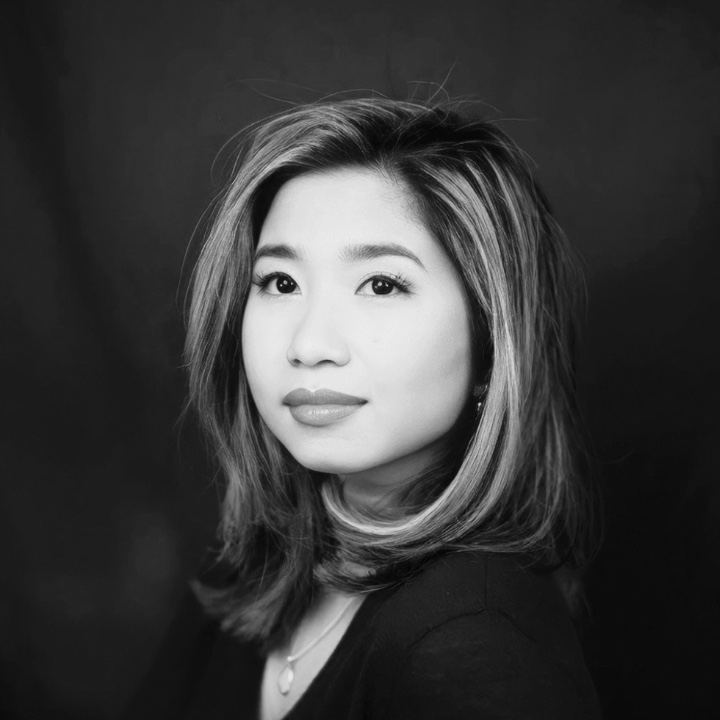 ⊕⊕
⊕⊕FIG. 00 · THE FOUNDER
Catherine D.L. Tan
FOUNDER & CEO
For a living, Catherine Tan designs legal worlds for things that don’t yet fit our categories: a bonkers job description, and an accurate one. Her work as a legal theorist architects a grand intellectual story: the ancient constructs that hold civilisation together, stress-tested by a wrecking ball of new axioms brought on by avant-garde technologies.
⊕ READ THE FULL DOSSIER
It was always going to be a strange career. As a teenager in Asia she was three people at once: an aspiring ambassador, a mathematician obsessed with financial crises, and a writer who won her country’s highest literary prize before finishing school. She became an economic diplomat, operating in theatres of the global stage. Then a legal theorist at Cambridge University, a Gates Scholar, working on the axioms and corollaries that buttress the world: the foundational categories through which reality is governed.
The fieldwork took her to the strangest fusions of art and technology: robots running on indigenous philosophy; plant-object cyborgs, living plants that double as machines. Whenever she presented this material, the answer was always the same: I have never heard of anything like this.
Her profession offered exactly one way to share it. The paper. But the material kept asking to be something else: a game, a 3D animated film, a three-act play. Eventually, Hollywood would agree before academia did. Creatives and producers approached her to develop stories from her PhD.
UFP is the same work, run on knowledge instead of law: she designs the future of thought, and builds the media systems to carry it. The press runs on her personal philosophy, scaled to an institution: world-destroying, then world-making.
THE ORIGIN STORY, IN THREE ACTS — READ THE LORE →
SELECTED DISTINCTIONS — GATES CAMBRIDGE SCHOLAR · MOST VISIONARY CEO IN MEDIA & PUBLISHING, 2024 · FORMER ECONOMIC DIPLOMAT · LECTURER, UNIVERSITY OF CAMBRIDGE · NATIONAL LITERARY PRIZE, GEOPOLITICAL SATIRE · TOP 100 TRAILBLAZING QUEER ALUMNI, UNIVERSITY OF CAMBRIDGE — ALONGSIDE TILDA SWINTON, SIR IAN McKELLEN & STEPHEN FRY
CONSTELLATIONS
The founding team is intentionally small. UFP assembles project-specific constellations of writers, artists, designers, researchers, and technologists around each programme. Interested in helping build it? Visit the Collaborator Portal →
The journal article was an answer to the printing press. We are building for what comes after.